
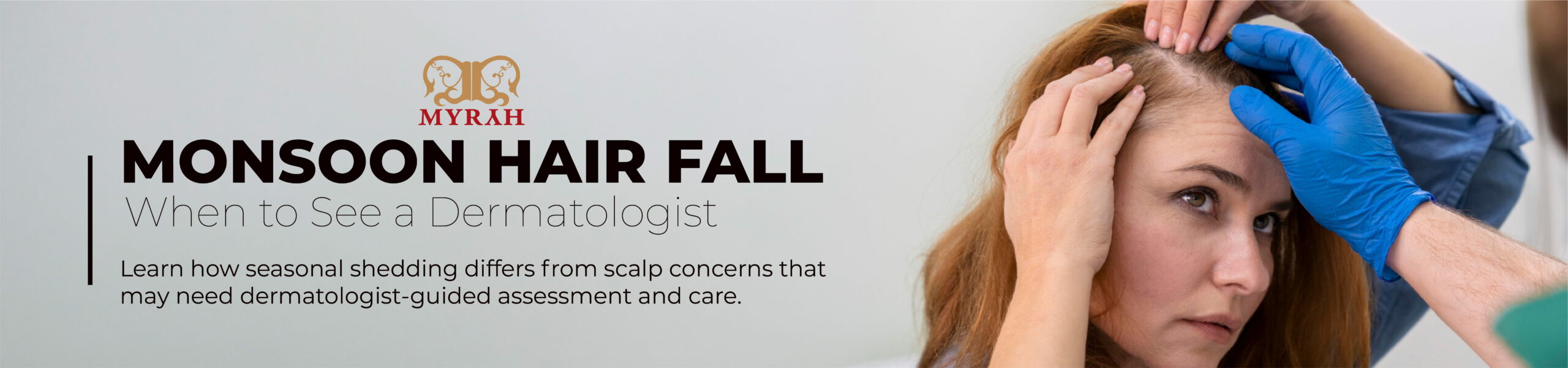
Monsoon Hair Fall: When to See a Dermatologist
Monsoon in Mumbai brings cooler weather, softer skies and a welcome change in the city’s rhythm. Yet for many people, the rainy season also brings a concern that feels deeply personal: increased hair fall. Extra strands on the pillow, more hair in the shower drain, visible shedding after combing or a scalp that feels oily, itchy and heavy can quickly create anxiety. Some seasonal shedding may be temporary, but persistent hair fall, scalp discomfort or visible thinning should not be ignored. At MYRAH DermaMed Santacruz, the flagship dermatology destination of MYRAH, monsoon hair fall is assessed with clinical precision, discretion and personalised dermatologist-led care.
If your hair fall feels heavier than usual this season, explore dermatologist-led hair care at MYRAH DermaMed Santacruz and begin with an expert consultation focused on scalp health, shedding patterns, hair density and seasonal triggers.
Why Hair Fall Often Increases During Monsoon
Monsoon can affect the scalp and hair shaft in several ways. Humidity keeps the scalp damp for longer, sweat mixes with oil and product residue, and rainwater exposure may leave hair feeling rough or heavy. Closed footwear, damp clothes and reduced sun exposure are often discussed during monsoon skin care, but the scalp experiences similar seasonal stress. When the scalp remains oily, itchy or inflamed, shedding may become more noticeable.
Hair fibre also reacts to moisture. During humid weather, hair can absorb water from the air, swell unevenly and become frizzy or fragile. This may lead to breakage, which many people mistake for root-level hair fall. A dermatologist helps distinguish between true shedding from the follicle and breakage along the hair shaft, because each concern needs a different care plan.
Seasonal Shedding vs Concerning Hair Fall
Some seasonal shedding can happen naturally. Hair moves through growth, transition and resting phases, and changes in weather, routine, stress, diet or health can make shedding more visible. However, hair fall needs expert attention when it continues for several weeks, appears sudden, feels excessive, creates visible thinning, widens the parting, affects the hairline or appears in patches.
Scalp symptoms are also important. Itching, scaling, pain, redness, dandruff, tenderness, bumps or burning should not be dismissed as simple seasonal irritation. These signs may indicate scalp inflammation, dandruff, infection, folliculitis or another condition that needs dermatologist-guided evaluation. For professional scalp and hair assessment, consult for hair treatment at MYRAH Santacruz.
Common Reasons Behind Monsoon Hair Fall
Monsoon hair fall can be linked to more than humidity. Nutritional deficiencies, recent illness, stress, crash dieting, thyroid imbalance, hormonal changes, postpartum shedding, certain medications, dandruff, androgenetic hair thinning and autoimmune hair loss may all contribute. When these causes overlap with seasonal humidity, shedding can appear more dramatic.
This is why changing shampoo alone may not solve the issue. A luxurious hair care routine may improve the feel of the hair, but root-level shedding needs medical understanding. A dermatologist evaluates the pattern of hair fall, the scalp condition, hair density, medical history, lifestyle and previous treatments before suggesting a plan. The goal is not only to reduce shedding, but to understand why the shedding is happening.
How Dandruff and Scalp Oiliness Affect Hair Fall
Dandruff often becomes more noticeable during monsoon because humidity and oiliness can disturb scalp balance. Flaking may appear dry and powdery or greasy and sticky. The scalp may itch, smell unpleasant, feel heavy or develop small bumps. Repeated scratching can weaken the hair shaft, increase breakage and create more discomfort. In some people, dandruff may coexist with seborrhoeic dermatitis, which requires a more structured treatment plan.
Random anti-dandruff shampoos may not always be enough. Some products may dry the hair lengths, while heavy oils can worsen scalp stickiness. MYRAH DermaMed Santacruz offers dermatologist-led evaluation so the right scalp care, cleansing rhythm and treatment support can be recommended based on the actual condition.
Hair Fall or Hair Breakage: Why the Difference Matters
True hair fall usually comes from the root and may show a tiny bulb at one end. Breakage appears as shorter, uneven strands that snap along the hair shaft. During monsoon, breakage can increase because damp hair is more fragile. Rough towel drying, aggressive detangling, tight wet hairstyles, frequent heat styling, colouring and chemical services can weaken the fibre further.
If the concern is breakage, the focus may include fibre repair, conditioning, cuticle protection and styling changes. If the concern is root-level shedding, the focus may include scalp diagnosis, medical evaluation, nutritional correction, prescription support or advanced hair rejuvenation. A dermatologist-led consultation helps ensure the right concern is being treated.
When You Should See a Dermatologist for Hair Fall
You should consider a dermatologist consultation if hair fall feels sudden, heavy or prolonged. It is also important if you notice patchy hair loss, scalp pain, severe dandruff, itching, thinning near the crown, a widening partition, receding hairline, increased shedding after illness or hair fall with fatigue, weight changes or hormonal symptoms. Early consultation can help identify concerns before density loss becomes more visible.
A professional consultation is also valuable when you have tried multiple shampoos, oils, supplements or salon treatments without improvement. Hair fall often becomes worse when too many products are used at once. Dermatology care helps simplify the routine and focus on what the scalp actually needs.
Dermatologist-Led Hair Assessment at MYRAH Santacruz
At MYRAH DermaMed Santacruz, hair fall evaluation begins with a detailed understanding of the concern. The dermatologist may assess the scalp, hair density, shedding pattern, dandruff, hair shaft quality, recent health changes, stress, nutrition, medications and family history. In selected cases, tests may be advised to understand nutritional, hormonal or medical contributors.
This diagnostic approach protects clients from unnecessary trial and error. Hair fall caused by seasonal shedding, dandruff, androgenetic thinning, nutritional deficiency or alopecia areata cannot be managed with the same plan. MYRAH’s approach combines medical clarity with the refined comfort of a luxury dermatology environment.
Hair Rejuvenation Options at MYRAH DermaMed
Depending on suitability, MYRAH DermaMed Santacruz offers advanced hair and scalp-focused options such as Hair PRP, Green Exosomes, Hair Mesotherapy, Hair Threads, DHT Block Hair Regrowth and HydraFacial Keravive for hair-related concerns. These services are selected only after evaluation, because seasonal shedding, scalp inflammation and patterned thinning require different strategies.
Hair PRP may be considered for suitable hair thinning concerns under medical supervision. Green Exosomes and other regenerative-style scalp treatments may be planned for clients who need advanced scalp support. Scalp-focused treatments may also be combined with dandruff care, nutritional guidance, prescription support and maintenance routines. To understand available options, explore hair rejuvenation services at MYRAH DermaMed.
Monsoon Hair Care Habits That Support Scalp Health
A good monsoon routine begins with scalp cleanliness. Wash the scalp when it feels oily, sweaty or exposed to rain, but avoid aggressive scrubbing. Dry the scalp properly after washing or rain exposure. Avoid tying hair tightly while it is wet. Use conditioner on the lengths, not the scalp, unless advised. Detangle gently and avoid rough towel friction.
Do not apply heavy oil to an itchy, flaky or inflamed scalp without guidance. Avoid switching products every few days. Use heat styling thoughtfully and protect the hair fibre when styling is needed. The best monsoon hair care routine is not excessive; it is consistent, scalp-aware and suited to your hair type.
What to Avoid When Hair Fall Feels Excessive
When hair fall increases, many people panic and begin using multiple oils, serums, masks, supplements and anti-hair fall shampoos together. This can irritate the scalp, weigh down the roots and make the concern harder to assess. Avoid harsh brushing, tight hairstyles, sleeping with wet hair, chemical services during active shedding and high-dose supplements without professional advice.
Also avoid delaying care if thinning is visible. Hair density concerns are often easier to manage when assessed early. For direct guidance, speak to MYRAH Santacruz about hair fall, scalp concerns and dermatologist-led treatment planning.
MYRAH DermaMed Santacruz: Flagship Hair and Scalp Dermatology
MYRAH DermaMed Santacruz offers dermatology-led hair and scalp care within the flagship MYRAH environment. The centre is designed for clients who value expertise, discretion and a premium care experience. Dermatology services are available at Santacruz, while MYRAH’s spa experiences are available across Santacruz, Juhu and Marine Drive. This makes Santacruz the destination for hair fall, scalp evaluation, skin care and advanced dermatology within the MYRAH ecosystem.
For visit planning, get directions to MYRAH Santacruz through the Google Business Profile. Guests may also book an online dermatologist consultation for initial guidance.
Early Care for Healthier-Looking Hair
Monsoon hair fall should be observed, but it should not be ignored when it becomes persistent, excessive or associated with scalp symptoms. The difference between temporary seasonal shedding and a deeper scalp or follicle concern can only be understood through proper assessment. With dermatologist-led care, hair fall can be approached calmly, intelligently and with a plan that respects both scalp health and long-term hair quality.
If the rainy season has changed your hair density, scalp comfort or confidence, connect with MYRAH DermaMed or view MYRAH Santacruz on Google and begin a refined, dermatologist-led hair care journey.
Frequently Asked Questions
Is hair fall normal during monsoon?
Mild seasonal shedding can happen during monsoon, but sudden, heavy, prolonged or patchy hair fall should be assessed by a dermatologist.
How do I know if my hair fall needs medical attention?
Consult a dermatologist if shedding continues for several weeks, thinning becomes visible, the scalp is itchy or painful, or hair falls in patches.
Can dandruff increase hair fall during monsoon?
Persistent dandruff and scalp inflammation may contribute to itching, scratching, breakage and increased visible shedding if not managed properly.
What is the difference between hair fall and breakage?
Hair fall usually comes from the root, while breakage appears as shorter snapped strands along the hair shaft. A scalp assessment can confirm the difference.
Does MYRAH Santacruz offer hair PRP?
Yes. Hair PRP is available at MYRAH DermaMed Santacruz and may be recommended for suitable hair thinning concerns after consultation.
Can monsoon hair fall be treated at home?
Basic seasonal shedding may improve with gentle care, but persistent or excessive hair fall needs dermatologist evaluation to identify the cause.
Where is monsoon hair fall care available at MYRAH?
Dermatologist-led hair fall and scalp care are available at MYRAH DermaMed Santacruz, the flagship dermatology centre in Mumbai.