
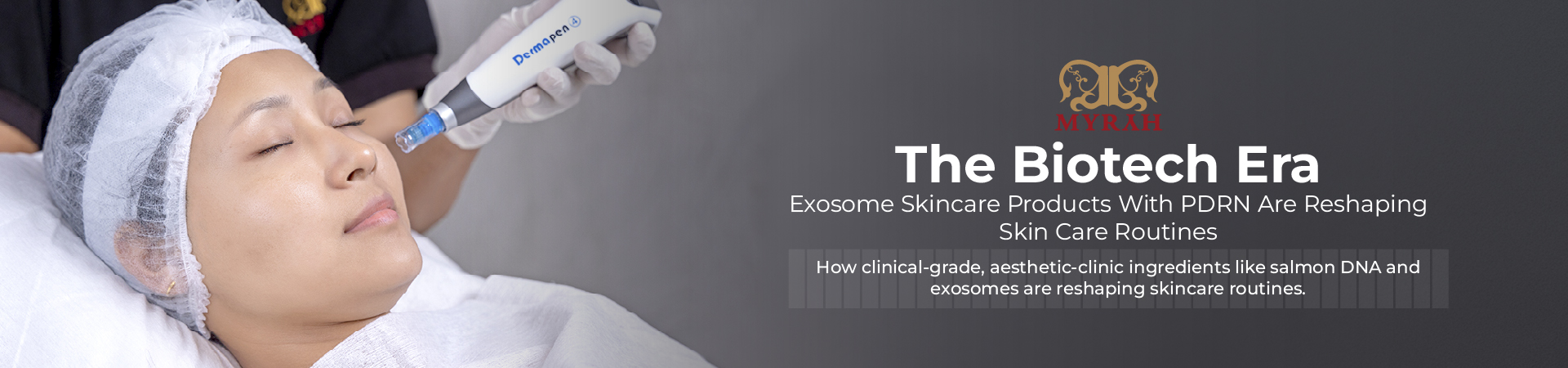
The Biotech Era: Exosome Skincare Products With PDRN Are Reshaping Skin Care Routines
Skin care is entering a more advanced, clinic-inspired era. For years, people focused on basic brightening creams, exfoliating acids, retinoids and hydrating serums. Today, the conversation has moved toward regenerative-looking ingredients, barrier repair, cellular communication, exosomes, polynucleotides and PDRN. These terms may sound highly scientific, but they are becoming part of modern aesthetic dermatology and premium skincare discussions worldwide. At MYRAH DermaMed Santacruz, the flagship dermatology destination of MYRAH, this shift is approached with professional judgement, realistic expectations and dermatologist-led routine design.
If you are curious about exosome skincare, PDRN or clinical-grade skin rejuvenation, explore MYRAH DermaMed Santacruz and begin with expert guidance before adding trend-led products to your routine.
What Is the Biotech Era of Skincare?
The biotech era of skincare refers to the rise of ingredients inspired by regenerative medicine, cellular repair research and aesthetic-clinic procedures. Instead of focusing only on surface glow, these routines aim to support skin quality, barrier strength, hydration, texture and visible resilience. Exosomes, PDRN, polynucleotides, peptides, growth-factor-style ingredients and advanced delivery systems are part of this larger shift.
This does not mean every product with a scientific label is automatically effective. It means skincare is becoming more sophisticated, and consumers need stronger professional guidance. The difference between a well-formulated clinical routine and a viral trend can be significant.
Understanding Exosomes in Skincare
Exosomes are tiny extracellular vesicles involved in cell-to-cell communication. In aesthetic dermatology, they are discussed for their potential role in supporting skin rejuvenation, post-procedure recovery, hydration, texture and visible ageing concerns. Exosome-based products and treatments are especially popular because they fit the modern demand for skin quality improvement rather than obvious cosmetic change.
At MYRAH DermaMed Santacruz, Exosome Therapy is part of the advanced skin rejuvenation conversation for suitable clients. The key word is suitable. Exosome-based care should be chosen after understanding skin condition, sensitivity, barrier strength, pigmentation tendency and treatment goals. To review available rejuvenation options, discover skin rejuvenation at MYRAH Santacruz.
What Is PDRN?
PDRN stands for polydeoxyribonucleotide. It is a DNA-derived ingredient commonly discussed in relation to skin repair, regeneration and rejuvenation. In beauty conversations, it is often called salmon DNA skincare because many PDRN sources have historically been associated with salmon-derived DNA fragments. Some newer products may use alternative or biotech-inspired versions, so the source and formulation should always be checked.
PDRN has gained attention because it aligns with the global interest in skin recovery, hydration, elasticity and glow. However, professional context matters. Injectable clinic treatments, post-procedure applications and over-the-counter topical products may not behave the same way. Delivery method, concentration, purity, product stability and skin condition influence the result.
Why Salmon DNA Became a Skincare Talking Point
The phrase salmon DNA sounds dramatic, which is why it became viral in beauty media. Behind the trend, the ingredient category relates to purified DNA fragments used in certain regenerative-style treatments and products. The appeal is clear: people want smoother, calmer, more luminous skin without aggressive routines. PDRN fits that desire because it is associated with repair-focused skincare language.
Still, consumers should avoid treating the term as a miracle promise. Not every product labelled PDRN or salmon DNA has the same quality, delivery or evidence. A dermatologist can help separate genuine skin-supportive planning from marketing language.
Exosomes and PDRN: Why They Are Often Discussed Together
Exosomes and PDRN are different, but they are often discussed together because both belong to the modern skin regeneration conversation. Exosomes are extracellular vesicles linked to cellular communication, while PDRN is a DNA-derived ingredient associated with repair and rejuvenation pathways. In premium skincare, they are sometimes positioned as clinic-inspired ingredients that support visible skin quality.
Together, they represent a shift away from harsh correction toward intelligent restoration. Instead of simply peeling, drying or forcing the skin to glow, the new approach asks how the skin can be supported, strengthened and guided toward healthier-looking function. For suitable clinical discussion, explore Exosome Therapy at MYRAH DermaMed.
Why Barrier Health Still Comes First
Even the most advanced ingredient cannot perform well on a damaged barrier. If the skin is stinging, peeling, inflamed, acne-flaring or over-exfoliated, adding more active products can create irritation. Barrier repair must come before biotech skincare. This includes gentle cleansing, moisturising, sunscreen, reduced exfoliation and suitable hydration support.
A strong barrier helps the skin tolerate active ingredients and professional treatments better. At MYRAH DermaMed Santacruz, skincare planning begins with the skin’s current condition, not only the client’s desired glow. This protects comfort and supports better long-term results.
How Biotech Skincare Fits Into a Dermatologist-Led Routine
Biotech skincare should not be added randomly. A dermatologist-led routine may include cleanser, moisturiser, sunscreen, antioxidants, retinoids, brightening agents, barrier creams, peptides, exosome-inspired products, PDRN-based products or medical-grade skincare depending on the diagnosis. The plan should be simple enough to follow and strong enough to address the concern.
For example, pigmentation-prone skin may need sunscreen and brightening care first. Acne-prone skin may need inflammation control. Mature skin may need collagen-supportive planning. Sensitive skin may need barrier repair before any active routine. For deeper product planning, read about medical-grade skincare guidance at MYRAH DermaMed.
Who May Benefit From Exosome or PDRN-Inspired Care?
Exosome or PDRN-inspired care may interest clients dealing with dullness, early ageing signs, dehydration, rough texture, tired-looking skin, post-procedure recovery support or reduced skin freshness. It may also appeal to clients who want advanced skincare beyond ordinary moisturisers and serums. However, suitability depends on skin type and concern.
Clients with active acne, eczema-like irritation, severe sensitivity, infection, recent allergic reaction, pregnancy-related questions or medical skin disease should not self-select advanced products without guidance. A dermatologist can decide whether the skin needs treatment, repair or a simpler routine before adding clinic-inspired ingredients.
Topical Products vs In-Clinic Procedures
One of the biggest misunderstandings in biotech skincare is assuming topical products and in-clinic procedures deliver the same effect. A topical serum sits on the skin surface and depends on formulation and penetration. In-clinic procedures may use professional protocols, devices or delivery methods under supervision. These are not interchangeable.
A PDRN cream, exosome serum or clinic-grade treatment may all belong to the same trend, but they can differ greatly. The question should not be, “Is this ingredient trending?” The question should be, “Is this format suitable for my skin, and does it fit my treatment plan?”
Pairing Exosome Skincare With Skin Rejuvenation
For suitable clients, exosome-style care may be discussed alongside skin rejuvenation treatments such as HydraFacial, peels, LED Phototherapy, Oxy Facial, Fire & Ice Facial, microneedling-style options, skin boosters or medical-grade skincare. The aim is to improve visible radiance, hydration, texture and recovery in a structured way.
Sequencing matters. Some clients need calming care first. Some may need pigmentation treatment. Others may benefit from a glow-focused plan before an event. The dermatologist decides which treatment comes first and how skincare should support the process.
PDRN, Skin Boosters and Injectable Hydration
PDRN is often discussed in the same beauty world as skin boosters because both are associated with skin quality rather than dramatic facial reshaping. Skin boosters may be considered for hydration, freshness and improved skin appearance depending on suitability. PDRN-based or polynucleotide-style treatments are part of the broader regenerative aesthetic trend in many markets.
At MYRAH DermaMed Santacruz, treatment planning remains personalised. The dermatologist may recommend skin boosters, exosome therapy, rejuvenation treatments, barrier repair or medical skincare based on what the skin actually needs. To understand available options, explore Skin Boosters at MYRAH DermaMed.
Why Mumbai Skin Needs Careful Selection
Mumbai’s climate makes advanced skincare selection more complex. Humidity, pollution, sweat, sun exposure, air-conditioning and post-monsoon dullness can make the skin reactive. A heavy cream may clog some skin types. A strong active may irritate pigmentation-prone skin. A trendy serum may not suit acne-prone or oily skin.
This is why dermatologist-led planning is especially important in Mumbai. The right routine should feel effective but wearable in local weather. It should protect the barrier, manage oiliness, support hydration and reduce unnecessary irritation.
Common Mistakes With Exosome and PDRN Products
The most common mistake is buying a viral product without understanding the formula. Another mistake is layering PDRN, retinol, acids, vitamin C, peels and exfoliating masks together, hoping for faster glow. This can weaken the barrier and trigger redness, breakouts or pigmentation. Some clients also stop sunscreen because they assume advanced products are enough.
Biotech skincare works best when the routine is disciplined. Use fewer products, apply them correctly and allow time for the skin to respond. If irritation starts, stop experimenting and consult a dermatologist.
How to Start Safely
Start with assessment. Identify whether your main concern is dullness, ageing, pigmentation, acne, dehydration, sensitivity or texture. Share your current routine with the dermatologist, including all actives and previous procedures. This helps avoid duplication and irritation.
A safe plan may begin with barrier support before adding advanced products. The dermatologist may then introduce selected ingredients gradually. For structured guidance, book an online dermatologist consultation.
MYRAH DermaMed Santacruz: Biotech Skincare With Clinical Precision
MYRAH DermaMed Santacruz offers dermatologist-led care for skin rejuvenation, exosome therapy, skin boosters, anti-ageing, pigmentation, acne and scar care, body treatments, hair rejuvenation and medical-grade skincare planning. The flagship centre is designed for clients who want advanced skin care with luxury comfort and professional judgement.
For location assistance, get directions to MYRAH Santacruz through the Google Business Profile. For quick support, speak to MYRAH Santacruz about advanced skincare planning.
The Future of Skin Care Is Intelligent, Not Complicated
Exosomes, PDRN and salmon DNA-inspired skincare show how quickly the beauty world is becoming more clinical, but the future is not about using every advanced ingredient at once. It is about choosing the right ingredient, in the right format, at the right time, for the right skin. The most elegant results come from clarity, not clutter.
If you want to explore the biotech era of skincare with confidence, discover MYRAH DermaMed Santacruz and begin a dermatologist-led routine designed for barrier health, refined radiance and long-term skin quality.
Frequently Asked Questions
What are exosomes in skincare?
Exosomes are tiny extracellular vesicles involved in cell communication and are discussed in aesthetic dermatology for skin rejuvenation and recovery support.
What is PDRN skincare?
PDRN skincare refers to products or treatments using polydeoxyribonucleotide, a DNA-derived ingredient associated with repair-focused and rejuvenation-oriented skin care.
Is PDRN the same as salmon DNA?
PDRN is often associated with purified salmon-derived DNA fragments, although some products may use alternative or biotech-inspired sources.
Can exosome and PDRN products replace dermatologist treatments?
No. Products may support a routine, but clinical concerns such as pigmentation, acne, scars or ageing changes need dermatologist-led assessment.
Who should avoid self-selecting biotech skincare?
People with active acne, irritation, rashes, severe sensitivity, pregnancy-related questions or medical skin conditions should consult a dermatologist first.
Are exosome treatments available at MYRAH DermaMed?
Exosome Therapy may be discussed at MYRAH DermaMed Santacruz for suitable skin and hair rejuvenation concerns after assessment.
Where can I get advanced skincare guidance at MYRAH?
Advanced skincare and dermatologist-led treatment planning are available at MYRAH DermaMed Santacruz, the flagship dermatology centre in Mumbai.