
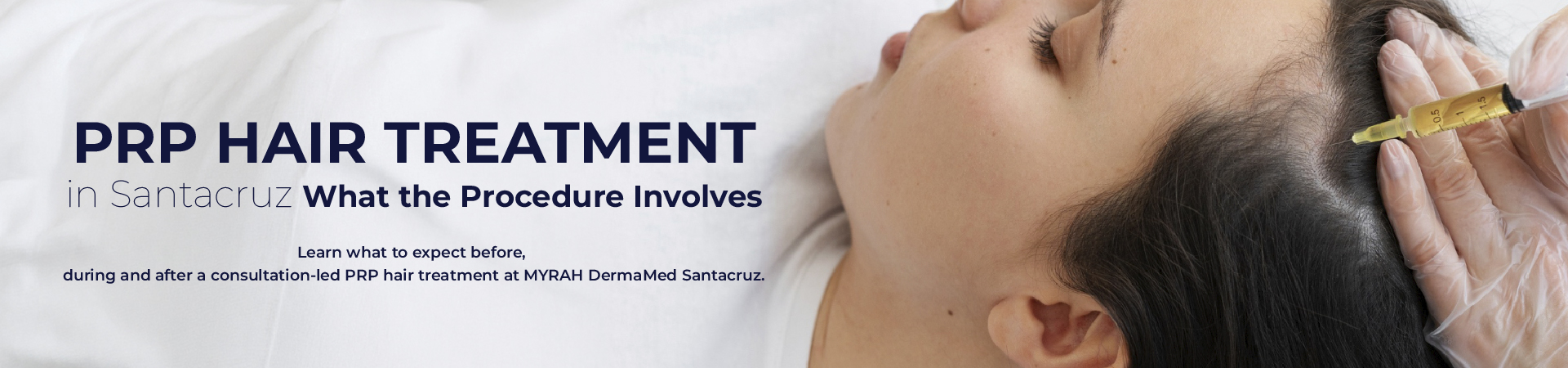
PRP Hair Treatment in Santacruz: What the Procedure Involves
Hair fall can feel deeply personal. For many people, it is not only about strands on a pillow or hair collected after a shower. It affects confidence, grooming, styling choices and the way one feels in professional or social settings. At MYRAH DermaMed Santacruz, the flagship dermatology destination of MYRAH, PRP Hair Treatment is planned through dermatologist-led consultation, scalp assessment and personalised suitability checks. This guide explains what to expect before, during and after a consultation-led PRP hair treatment so clients can approach the procedure with clarity, calm and realistic expectations.
If you are noticing thinning, shedding or reduced hair density, explore MYRAH DermaMed Santacruz and begin with a professional hair and scalp consultation.
What Is PRP Hair Treatment?
PRP stands for Platelet-Rich Plasma. It is a treatment approach that uses components from a client’s own blood. A blood sample is processed so the platelet-rich plasma can be separated and prepared. This plasma is then used in targeted scalp areas after medical assessment. PRP is commonly discussed for certain hair fall and hair thinning concerns, especially when the goal is to support scalp health and encourage a better environment for hair growth.
PRP is not a salon service and it is not a quick cosmetic shortcut. It is a medical procedure that should be planned by a qualified dermatologist after understanding the cause of hair fall. To review the service, discover Hair PRP at MYRAH DermaMed.
Why Consultation Comes First
Hair fall has many causes. It may be linked to genetics, stress, nutritional deficiencies, hormonal changes, illness, postpartum changes, scalp inflammation, dandruff, medications, harsh styling, chemical damage or seasonal shedding. PRP may suit some hair loss patterns, but it is not suitable for every type of hair fall. This is why consultation is the first and most important step.
During the consultation, the dermatologist studies your hair loss pattern, scalp condition, medical history, family history, lifestyle, previous treatments and current hair care habits. This helps decide whether PRP should be considered, combined with other therapies or delayed until another concern is treated.
Who May Be Suitable for PRP Hair Treatment?
PRP may be considered for clients with certain types of hair thinning or early hair density concerns, depending on diagnosis and scalp condition. It may also be discussed when the dermatologist feels the follicles may still respond to supportive treatment. Suitability depends on the stage of hair loss, scalp health, overall health and realistic goals.
People with advanced bald areas, scarring alopecia, active scalp infection, certain blood disorders or uncontrolled medical concerns may need a different plan. The dermatologist may recommend investigations, medicines, topical care, scalp treatment or other options before deciding on PRP.
What Happens Before PRP?
Before PRP, the dermatologist may examine the scalp closely and ask about the duration of hair fall, shedding pattern, hair thinning areas, dandruff, itching, oiliness, diet, sleep, stress and recent illness. Photos may be suggested for progress tracking. Blood tests may also be advised when deficiency, thyroid imbalance, hormonal concerns or general health factors are suspected.
Clients should share all relevant information, including medicines, supplements, allergies, previous procedures, bleeding concerns, pregnancy-related questions and medical conditions. A safe and elegant treatment journey depends on honest consultation. For early planning, book an online dermatologist consultation.
The Blood Sample and Preparation Step
Once PRP is considered suitable, a small blood sample is collected as part of the procedure. The sample is then processed using specialised preparation methods so the platelet-rich plasma can be separated from other blood components. The goal is to prepare a concentrated plasma portion that can be used in selected scalp areas.
This step should be performed in a clean, professional dermatology setting with sterile protocols. Since the procedure uses the client’s own blood, correct handling, preparation and hygiene are essential. At MYRAH DermaMed Santacruz, the experience is designed to remain clinical, calm and premium.
What Happens During the Procedure?
During PRP Hair Treatment, the prepared plasma is introduced into targeted areas of the scalp according to the dermatologist’s treatment plan. The areas may be selected based on thinning pattern, scalp condition and clinical judgement. The experience may involve mild discomfort, pressure or sensitivity, but comfort measures and technique help make the procedure more manageable.
PRP is precise rather than decorative. The aim is not to apply a generic product across the hair. It is to place the prepared plasma where it may be most relevant for the client’s concern. This is why dermatologist-led mapping and technique matter.
What Does PRP Feel Like?
Sensation varies from person to person. Some clients describe the procedure as tolerable, while others may feel more sensitivity in certain scalp areas. The scalp is a delicate region, and comfort can depend on hair density, sensitivity, anxiety, needle tolerance and treatment area.
It is important to share discomfort honestly during the procedure. A refined dermatology experience should feel guided, respectful and controlled. Clients should not feel rushed or uninformed at any stage.
What Happens After PRP?
After PRP, the scalp may feel mildly tender, tight or sensitive for a short period. Some redness or pinpoint marks may be visible temporarily. The dermatologist provides aftercare instructions based on the procedure and the client’s scalp condition. These instructions may include guidance around washing, products, exercise, sun exposure, hair treatments and styling practices.
Aftercare is important because the scalp needs to remain clean and comfortable. Clients should avoid applying random oils, strong actives, harsh products or unadvised home remedies immediately after the procedure. Follow the dermatologist’s specific instructions rather than general internet advice.
When Can Results Be Expected?
PRP for hair is a gradual treatment approach. Hair growth cycles are slow, and visible changes may take time. Some clients may notice reduced shedding or improved hair feel earlier, while density-related changes usually need consistent planning and review. Results vary based on diagnosis, age, genetics, scalp condition, nutrition, hormonal factors and adherence to the overall plan.
PRP should not be promoted as a guaranteed or instant hair growth solution. It works best when expectations are realistic and when the underlying cause of hair fall is managed properly.
How Many Sessions Are Needed?
The number of PRP sessions varies. A dermatologist may recommend a structured plan depending on the hair loss type, stage and response. Some clients need an initial series followed by maintenance, while others may need a different combination of therapies. The plan is personalised after evaluation rather than fixed for everyone.
Review appointments help track progress and adjust treatment. Photos, scalp examination and feedback about shedding, density, itching or dandruff help the dermatologist decide the next step.
PRP With Other Hair Treatments
PRP may be combined with other hair and scalp treatments when appropriate. At MYRAH DermaMed Santacruz, hair care may include PRP, Mesotherapy, Exosomes, dandruff treatments and dermatologist-led scalp care depending on concern and suitability. Combination planning is useful when hair fall has multiple contributors.
For example, a client with dandruff and shedding may need scalp inflammation control before advanced procedures. A client with nutritional deficiency may need correction alongside treatment. To explore the wider category, view MYRAH DermaMed services.
PRP for Monsoon Hair Fall Concerns
Mumbai’s monsoon can make hair fall feel more noticeable. Humidity, sweat, damp scalp, dandruff flare-ups, pollution, frequent washing and tying wet hair can create scalp stress. Some shedding may be seasonal, but persistent or heavy hair fall needs professional assessment.
PRP may be considered only after the dermatologist identifies whether the shedding is seasonal, genetic, inflammatory, deficiency-related or linked to another cause. This distinction prevents unnecessary treatment and helps create a more accurate plan.
What to Avoid Before and After Treatment
Clients should avoid self-medicating, using strong scalp actives without guidance or starting multiple hair supplements without knowing deficiencies. Before PRP, share all medicines and health concerns with the dermatologist. After PRP, avoid scratching, harsh hair products, aggressive scalp massage or chemical services unless approved.
Hair fall treatment requires patience. Overdoing oiling, changing shampoos repeatedly or using online remedies can irritate the scalp and delay proper care. A simple, dermatologist-approved routine often performs better than a complicated one.
MYRAH DermaMed Santacruz: A Refined Setting for Hair PRP
MYRAH DermaMed Santacruz offers PRP Hair Treatment within a dermatologist-led environment focused on clinical assessment, customised planning and luxury comfort. The Santacruz flagship centre supports advanced dermatology services including hair and scalp care, skin rejuvenation, pigmentation, acne and scar care, anti-ageing treatments, skin boosters, body treatments and medical-grade skincare guidance.
For visit planning, get directions to MYRAH Santacruz through the Google Business Profile or connect with MYRAH DermaMed for consultation assistance.
How to Book PRP Hair Treatment in Santacruz
When booking, share whether your concern is hair fall, thinning, receding hairline, reduced density, postpartum shedding, dandruff, scalp itching, oily scalp, breakage or seasonal shedding. Mention how long the concern has been present and whether you have already used medicines, supplements or salon treatments.
For direct assistance, speak to MYRAH Santacruz and plan a consultation-led hair restoration discussion at MYRAH DermaMed.
Clarity Before Treatment Builds Confidence
PRP Hair Treatment in Santacruz is best approached with information, patience and dermatologist-led planning. The procedure involves assessment, blood sample collection, plasma preparation, targeted scalp application and aftercare guidance. It may be helpful for suitable hair thinning concerns, but results vary and the cause of hair fall must always be understood first.
If you are ready to explore hair restoration options with a calm, clinical and luxurious approach, discover MYRAH DermaMed Santacruz and begin your PRP hair consultation with expert-led confidence.
Frequently Asked Questions
What is PRP Hair Treatment?
PRP Hair Treatment uses platelet-rich plasma prepared from a client’s own blood and applied to targeted scalp areas after dermatologist assessment.
Who is suitable for PRP hair treatment?
PRP may suit certain hair thinning and hair fall concerns, depending on diagnosis, scalp health, hair loss stage and dermatologist recommendation.
Is PRP Hair Treatment painful?
Some clients may feel mild discomfort or scalp sensitivity, but the procedure is performed with care and comfort guidance.
How soon can PRP results be seen?
Hair improvement is gradual. Visible changes vary and may depend on hair cycle, diagnosis, treatment plan, nutrition and overall scalp health.
Can PRP stop all types of hair fall?
No. PRP is not suitable for every type of hair fall. A dermatologist must first identify the cause before recommending treatment.
Where is PRP Hair Treatment available at MYRAH?
PRP Hair Treatment consultation and planning are available at MYRAH DermaMed Santacruz, the flagship dermatology centre in Mumbai.
How can I book PRP Hair Treatment in Santacruz?
You can book through MYRAH DermaMed’s official website, WhatsApp assistance, online consultation or the Santacruz contact page.